



A MacBook becoming warm during video editing or another sustained workload is different from one repeatedly shutting down or getting unusually hot while doing very little. Fan noise can be normal on models with fans. The useful clues are the workload, how long the heat persists and what else has changed.
Heat symptoms that should stop home checks
If you notice swelling, physical deformation, smoke or a burning smell, stop using and charging the Mac and arrange inspection. Do not force a stiff trackpad or press a bulging case flat.
Heat can cause a Mac to reduce processing performance. Freezes and lag can have other causes too, so note whether they appear with the heat or at other times.
What can contribute to abnormal heat
1. Dust and Debris
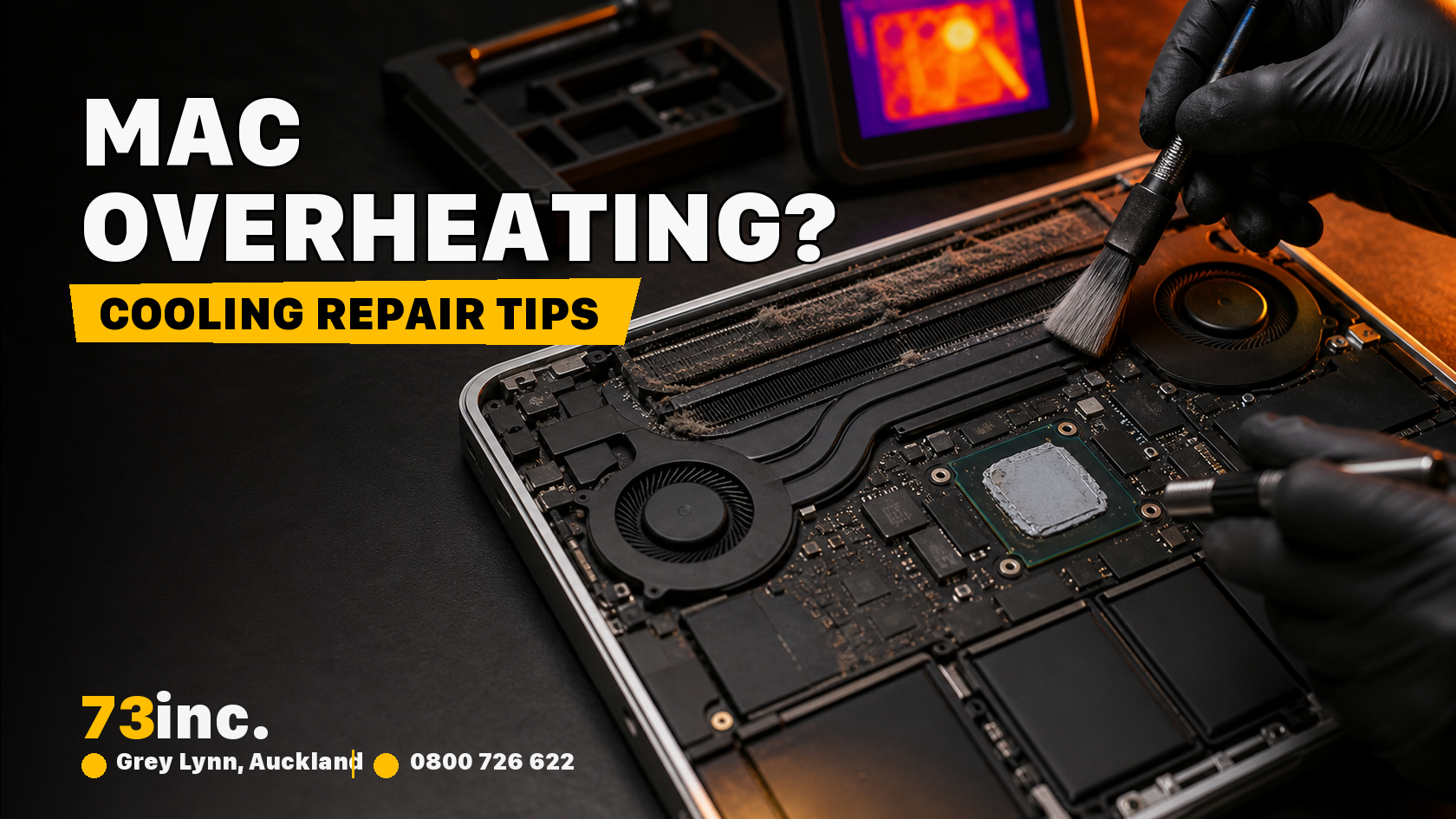
Dust can accumulate inside some models. If enough builds up at ventilation openings, it can restrict airflow. Do not open the Mac or insert objects into vents as a routine home fix.
2. Resource-Hungry Applications
Video rendering, games and busy browser sessions can keep the processor working. Check Activity Monitor to see what is active rather than assuming a closed app is still running.
3. Thermal paste and cooling hardware
Some Mac models use thermal interface material between the processor and cooling assembly to transfer heat. Its condition and service needs depend on the model and inspection. Warmth alone does not justify routine thermal-paste replacement.
| Symptom | What it tells you | Next step |
|---|---|---|
| Fan keeps running | May reflect workload | Check whether it settles when the workload ends |
| Keyboard or underside feels hot | Touch alone does not identify the cause | Stop if uncomfortably hot; note the workload and surroundings |
| Repeated unexpected shutdowns | Heat, power or another fault may be involved | Stop repeated testing and arrange assessment |
| Performance slows as heat rises | Thermal management may be involved | Reduce the workload and note whether performance recovers |
Safe checks while the Mac is otherwise stable
- Reduce the workload: close unused apps and browser tabs, then observe whether the heat settles.
- Use a firm, ventilated surface: keep vents clear and avoid bedding or cushions.
- Check charging equipment: stop using a damaged charger or cable. If charging is also unreliable, record that symptom; the MacBook charging guide covers that separate check.
- Review supported software updates: an update may address a software issue, but it is not proof that heat has a software cause.
When the pattern needs an assessment
If heat persists during light tasks or the Mac repeatedly shuts down, arrange a MacBook assessment in Auckland. Note what was running, whether it was charging and how often it happens. That record is more useful than describing the Mac as simply “hot”.


