


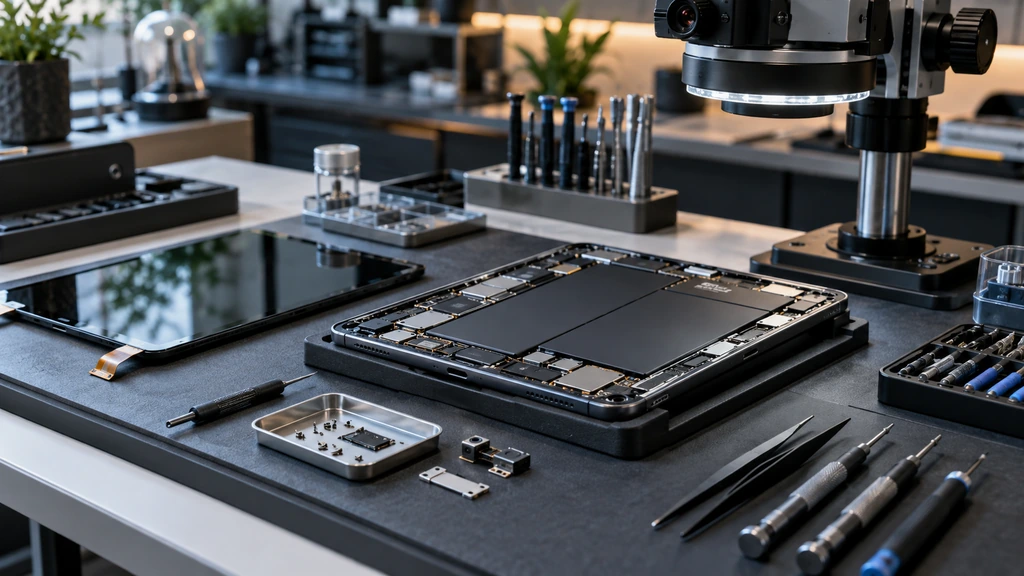
A tablet fault can become harder to deal with when the first response is to prise it open, press a loose screen down or try a factory reset. The useful first decision is whether the device is safe to handle and whether an attempted fix could put important data at risk.
These mistakes apply across tablets, including iPads, Android tablets and Microsoft Surface devices. Their construction and repair options differ, so instructions for one model are not a repair plan for another.
1. Continuing to use or charge a damaged tablet
A device that still switches on is not necessarily safe to keep using. Stop using it if you suspect battery damage, see the casing changing shape or find that the screen has started lifting. Do not keep charging it to see whether the problem goes away.
A cracked screen also needs care: using it can expose you to broken glass. After liquid exposure, avoid repeated attempts to turn the tablet on or plug it in. Do not apply heat or push anything into its ports to try to dry it. Describe the exposure when asking for advice, even if the tablet appears to work again.
Apple’s iPad safety information warns against using a damaged device and charging when moisture is present. For other tablets, check the manufacturer’s safety guidance for that model. If the device seems unsafe to handle, seek advice before bringing it into a repair lab.
2. Treating an opening video as a complete repair plan
Opening the tablet is not automatically the first step in diagnosis. A video may show where to start lifting a screen without establishing what is wrong with your device, what lies beneath that edge or whether the same method applies to your model.
Adhesive, cables and batteries can sit close to the area being worked on. Improvised prying, uncontrolled heat or an incorrectly placed tool can damage a part that was still working. A set of repair tools alone does not resolve those risks.
If the tablet has already been opened, stop rather than forcing it back together. Keep loose parts safely together and tell the repairer what was removed or disconnected. Do not guess where a screw belongs. Model-specific procedures and suitable handling precautions, including protection against static discharge, matter during internal work.
3. Pressing a lifting screen back into place
A gap around the screen is a reason for assessment, not a reason to add glue, clamp the tablet or put a heavy object on it. A swollen battery is one possible cause; the gap alone does not confirm the diagnosis.
Microsoft advises owners to stop using a Surface if its battery has visibly expanded beyond the enclosure. Do not press, puncture or attempt to remove a suspected swollen battery yourself. Pressure on the screen can also break the display or damage what is underneath it.
Describe the change in shape when arranging help. Do not try to make the tablet look normal before someone examines it.
4. Erasing the tablet before deciding what matters on it
A factory reset is not a harmless general repair step. It can remove information you still need, and it will not repair physical damage. A restart, a settings reset and a full erase are different actions; read what the chosen option actually does before continuing.
For example, Apple distinguishes resetting settings from Erase All Content and Settings, which removes the iPad’s content. Other tablet systems use different menus and wording.
If the tablet is safe to use, check that the files you need are available in a backup or another verified copy. If it is damaged or cannot be accessed, explain the data priority before approving work. Do not continue using an unsafe device just to make a backup, and do not assume repair or recovery can preserve everything.
For a school or work tablet, involve the organisation responsible for it before erasing data or changing its setup.
5. Buying a part because its name matches the symptom
“Not charging” does not, by itself, prove that a battery needs replacing. A black screen does not, by itself, prove that the display has failed. Those descriptions tell a repairer what you observe; they do not identify the failed component.
Ordering a screen, battery or charging connector before assessment can leave you with a part that does not address the fault or is not compatible with the exact model. Keep a record of what happened and any checks already tried instead of working through a succession of replacement parts.
Ask what the assessment has established, what remains uncertain and why the proposed repair addresses the fault. That is more useful than asking for a particular part to be changed before the cause is known.
6. Agreeing to a repair without checking the scope
Before approving work, establish the exact tablet model and the proposed approach. Ask about the part being offered, compatibility, any expected limitations and what happens if another fault is found. A description such as “replacement screen” does not answer all of those questions.
Check the assessment charge, proposed repair cost, likely parts availability and estimated timing. Ask what any repair warranty covers and excludes; do not assume every later problem will be covered. A repair estimate is not a promise that the tablet will be restored to new condition.
For an older device, consider its other faults and whether it still supports the software you need. The right decision depends on the particular tablet, the diagnosed fault and the available options—not simply on whether someone can fit a replacement part.
Before you arrange an assessment
Give the repairer the model if known, what changed and whether there was a drop, spill or previous repair attempt. Make any safety concern or lack of a backup clear at the start. You do not need to open, erase or keep testing a damaged tablet to provide that information.
73inc is an independent repairer. Our iPad repair page explains the iPad assessment pathway. For another tablet type, contact 73inc with the model and fault to check whether an assessment is available before travelling. Repair options depend on the model, condition and parts; establishing those limits is part of making an informed decision.


